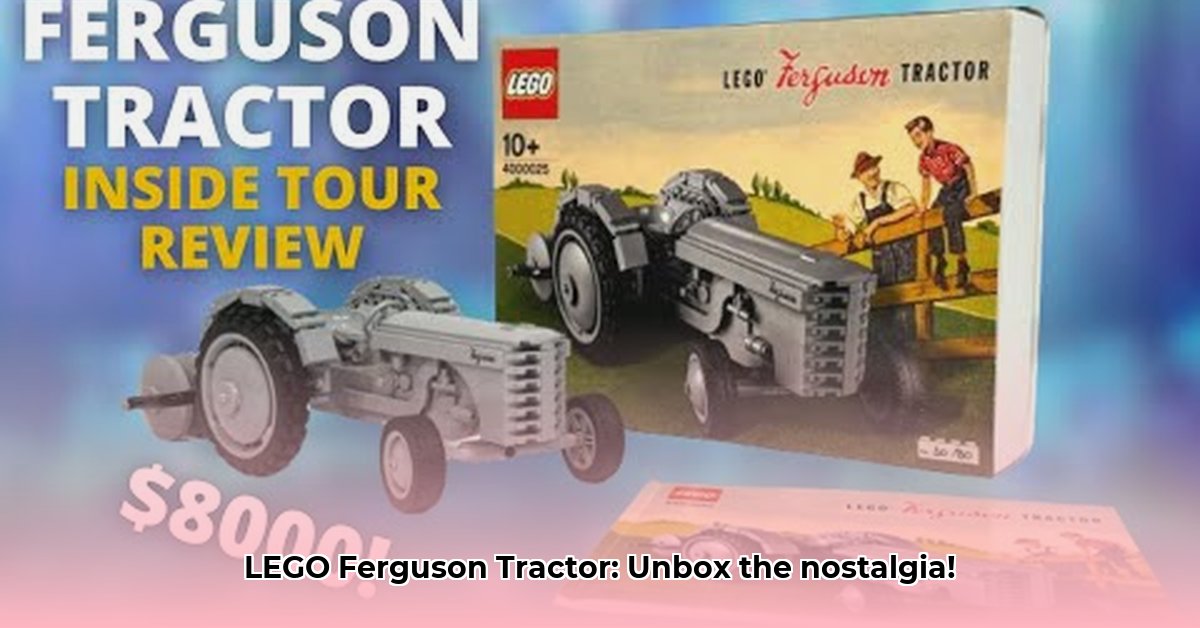
The LEGO Ferguson TE-F Tractor. The name alone might evoke childhood memories for some, but this unassuming plastic model represents a pivotal moment in LEGO's history—a bold gamble that redefined the company's trajectory. This wasn't just another toy; it was a tiny piece of agricultural history, a testament to innovative engineering, and a surprisingly lucrative venture. Let's delve into the story of this iconic LEGO set, from its surprisingly high production costs to its enduring legacy as a collector's item. For more on vintage tractors, see this site on antique toy tractors.
From Wooden Toys to Plastic Pioneers: A Risky Venture
Before LEGO became synonymous with brightly colored plastic bricks, the company primarily produced wooden toys. The transition to plastic in the early 1950s was a monumental shift—a risky, expensive undertaking in a world unfamiliar with injection molding's potential. The 1951 LEGO Ferguson tractor, a meticulously detailed replica of the iconic real-life machine, exemplifies this bold leap. Its initial production cost—a staggering DKK 30,000—far exceeded the cost of a real Ferguson tractor. This was a gamble of significant proportions, but one that would ultimately reshape LEGO’s future. Did it pay off? Absolutely. The success was undeniable.
A Tiny Tractor, Mirroring Post-War Prosperity in Denmark
The Ferguson tractor itself held immense significance in post-war Denmark. The Marshall Plan's influx of US aid modernized Danish agriculture, making the Ferguson a ubiquitous symbol of progress and prosperity. LEGO astutely recognized this cultural relevance. Their replica wasn’t just a toy; it was a tangible representation of a nation's economic growth and technological advancement. This deeper connection with the cultural landscape resonated profoundly with Danish children and families, transforming the tractor into more than just a plaything. It was a symbol of hope, progress, and a brighter future.
Two Toys in One: A Clever Marketing Strategy
The LEGO Ferguson tractor’s genius lay not just in its design, but also in its dual functionality. Children could enjoy a fully assembled, ready-to-play model, or they could engage in the creative process of building it from individual bricks. This innovative approach broadened the toy's appeal significantly, attracting children who preferred instant gratification and those who reveled in construction’s rewarding challenge. This "two-in-one" approach, a masterful marketing strategy, undoubtedly propelled the tractor’s popularity and maximized sales.
A Resounding Success: Sales Figures Tell the Tale
The LEGO Ferguson tractor's success wasn't subtle. An estimated 100,000 units were sold between 1951 and 1954, far surpassing initial expectations. This phenomenal success more than justified the initial investment and demonstrated the power of aligning a product with relevant cultural trends. The substantial financial windfall fueled further innovation and expansion, laying the groundwork for LEGO’s global dominance. It wasn't simply a financial victory; it validated LEGO’s daring shift to plastic, opening up a world of creative possibilities.
A Legacy That Endures: The Collector's Item
The story continues beyond the toy's initial release. The enduring popularity of the LEGO Ferguson tractor is vividly evidenced by the 2018 limited-edition replica. This highly sought-after collector's item underscores the model’s lasting appeal and its secure place within LEGO's rich history. Its re-release is not just a nod to brand recognition but a testament to the nostalgic power of a simple yet meaningful toy and its ability to transcend generations.
The LEGO Ferguson Tractor: A Summary of Triumph
| Feature | Details | Impact |
|---|---|---|
| Initial Production Cost | DKK 30,000 (a substantial risk) | Showcased LEGO's dedication to quality and innovation, despite high costs. |
| Sales (1951-1954) | Approximately 100,000 units | Massive financial success, fueling future growth and development. |
| Unique Selling Proposition | Pre-built and buildable versions; maximized customer appeal and satisfaction. | Broadened the toy’s market reach, appealing to various preferences. |
| Cultural Significance | Reflected post-war agricultural modernization; a symbol of progress in Denmark | Created a strong emotional connection with the toy and its target audience. |
| Collector's Item Status | 2018 limited-edition replica released | Demonstrates enduring popularity and a secure place in LEGO history. |
The LEGO Ferguson TE-F Tractor's journey transcends the simple narrative of a toy; it embodies innovation, bold risk-taking, and the enduring power of a product perfectly aligned with its cultural context. It remains a compelling case study in successful product design, marketing, and the long-lasting impact of a well-executed vision.